
News
Australia's burning - a call to action
Posted 13 01 2020
in News
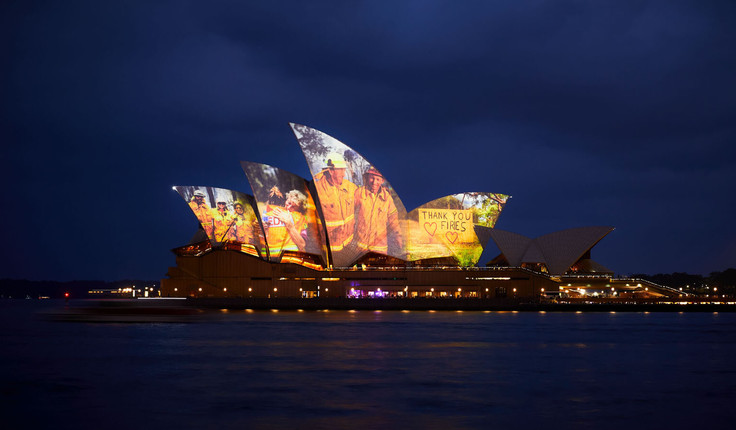
Watch Video
Wherever you were around the world this holiday break - there was no escaping the cataclysmic Australia fires and as we get back to business for this new decade there is no doubt the fires and their effects will continue to dominate discussion.
It’s going to be an important year and decade for the landscape architecture profession as it works to mitigate the impact of climate change and those fires are a stark reminder of just how global warming intensifies the impact of natural disasters.
Even if your holiday took you off grid over the last few weeks, chances are you’d have been struck by the orange haze that cloaked swathes of New Zealand as smoke from the horrific fires drifted 2,000km across the Tasman Sea.
The statistics around these fires are staggering. Aside from the human death toll( at least 27 people) a billion animals have been killed. Experts predict some species will be pushed to extinction, their homes and food sources gone. The fires have pushed back conservation efforts by decades, ecologists say, and, as climate heating takes hold, some species may never recover.
An estimated 10 million hectares (100,000 sq km) of bush, forest and parks across Australia have burned. Thousands of homes have been incinerated.
And then there’s the health risks. There’s no precedent to know the long-term impacts of breathing toxic bushfire smoke.
Landscape architects can play a significant role in Australia’s recovery from the fires, the Australian Institute of Landscape Architects says. As part of multidisciplinary teams they can ensure a holistic approach by reinforcing the need to consider the diversity of values that are significant to society.
Specialised landscape architects can recognise and manage the hazards and risks associated with development in and adjacent to fire prone landscapes – particularly areas of bush – and develop designs and management plans that reduce future risk.
They understand the value of landscape amenity and connection to nature, habitat retention, the economic resource of natural and rural landscapes to communities, and the need to balance the aims of alleviating bushfire risk with preservation of landscape values. This understanding adds value to all development proposals, the AILA says.
Around the world the profession has a critical role to play in the fight against climate change by mitigating the causes of global warming. As the American Society of Landscape Architects reminds it members, designing walkable communities reduces emissions. Using green roofs, water-efficient design and sustainable materials and construction practices makes the built environment more energy and carbon efficient. And by protecting and expanding carbon-sequestering landscapes such as forests, wetlands and grasslands, we are helping to draw down atmospheric carbon dioxide.
Every measure possible has to be used to help our communities adapt and improve their resilience as our planet heats up.
The video explains how the fires have affected immediate weather patterns.
Watch Video - click here